
A well-designed STEM classroom transforms learning. It creates spaces where curiosity grows and innovation takes root.
STEM classroom design combines flexible layouts, appropriate furniture, and defined learning zones to support hands-on exploration, collaboration, and problem-solving. Effective designs adapt to various teaching methods while engaging students through intentional organization and environmental elements.
![Modern STEM classroom with flexible learning stations and educational materials] "Modern STEM classroom with flexible learning stations and educational materials")
Looking to create a STEM classroom that inspires young minds? The right design can significantly enhance student engagement, collaborative learning, and hands-on exploration in science, technology, engineering, and mathematics.
Characteristics of Effective STEM Classroom Design
Great STEM classrooms share specific design principles. These features create optimal learning environments for young students.
Effective STEM classroom designs promote flexibility, accessibility, organization, and hands-on learning. They incorporate durable furniture, storage solutions, and varied spaces that support different learning modalities and group sizes while maintaining safety and supervision.
![Close-up of child-friendly STEM furniture with storage solutions] "Child-friendly STEM furniture with storage solutions")
The key characteristics of well-designed STEM classrooms include:
- Flexibility: Furniture and spaces that adapt to various activities and teaching methods
- Accessibility: All materials and stations within easy reach for young learners
- Organization: Clear systems for storing and accessing educational materials
- Titọ: Furniture and fixtures built to withstand frequent use and messy projects
- Aabo: Rounded edges, non-toxic materials, and clear pathways for movement
- Accessibility: Design elements that accommodate diverse learning needs and abilities
- Visibility: Spaces where teachers can easily monitor all learning activities
- Technology Integration: Thoughtful placement of devices and charging solutions
How to Design a STEM Classroom?
Creating a STEM classroom begins with understanding student needs and learning objectives. The process involves careful planning and intentional design.
Designing a STEM classroom requires assessing available space, selecting appropriate furniture, creating distinct learning zones, incorporating technology, and considering storage solutions. The goal is to create an environment that supports both structured learning and open-ended exploration.
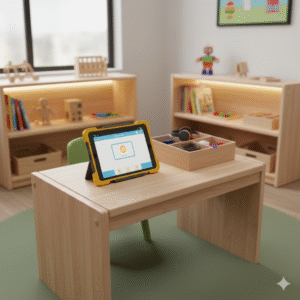 "Teacher planning STEM classroom layout with blueprints")
Here's a step-by-step approach to designing an effective STEM classroom:
-
Assess Your Space: Measure dimensions and identify architectural features. Consider fixed elements like doors, windows, and built-in storage.
-
Define Learning Objectives: Determine the types of activities and skills the classroom will support. Will it focus on engineering, coding, scientific inquiry, or all STEM areas?
-
Plan Learning Zones: Create distinct areas for different activities. Common zones include building/construction, technology/computing, reading/writing, and messy experiments.
-
Select Appropriate Furniture: Choose tables, chairs, and storage units sized for young learners. Consider height adjustments and mobility.
-
Consider Traffic Flow: Design clear pathways for movement between zones. Ensure easy access to exits and shared resources.
-
Incorporate Technology: Plan for device placement, charging solutions, and interactive displays. Consider both wired and wireless connectivity.
-
Implement Storage Solutions: Create organized systems for materials, tools, and completed projects. Labels help maintain order.
-
Add Environmental Elements: Consider lighting, wall displays, and plants to create an engaging atmosphere.
-
Test and Refine: After implementation, observe how students use the space. Make adjustments based on actual usage patterns.
Factors to Consider in STEM Classroom Design
STEM classroom design requires careful consideration of multiple factors. These elements directly impact learning effectiveness and student engagement.
Key factors include age-appropriateness, safety standards, budget constraints, technological requirements, furniture durability, and the balance between collaboration spaces and individual work areas. Each factor influences how students will interact with their learning environment.
 "Children collaborating on STEM project in well-organized classroom")
The most important factors to consider when designing a STEM classroom are:
| Factor | Considerations | Implementation Tips |
|---|---|---|
| Age Appropriateness | Furniture size, complexity of materials, safety features | Use child-sized furniture and age-appropriate tools |
| Safety Standards | Non-toxic materials, rounded edges, stable construction | Regular inspections and maintenance of all furniture |
| Budget Constraints | Prioritize essential elements and multi-functional pieces | Consider durable, long-term investments over cheaper options |
| Technological Needs | Device requirements, charging solutions, connectivity | Plan for future technological upgrades |
| Space Utilization | Traffic flow, zone placement, capacity | Create flexible spaces that adapt to different activities |
| Inclusivity | Accessibility for diverse needs and abilities | Ensure all students can participate in all activities |
| Storage Requirements | Material organization, project preservation, accessibility | Implement clear labeling and accessible shelving |
Different STEM Classroom Area Layouts
STEM classrooms can be organized in various ways. Different layouts support different teaching methods and learning activities.
Common layouts include zone-based designs, studio setups, hub-and-spoke arrangements, and modular configurations. Each offers unique advantages for implementing STEM curricula and facilitating student collaboration.
aerial view of STEM classroom with designated learning zones](https://placehold.co/600x400 "Aerial view of STEM classroom with designated learning zones")
Let's explore the most effective STEM classroom layouts:
-
Zone-Based Layout: The classroom is divided into specific areas for different activities (building, technology, reading, etc.). This approach helps students understand expectations for different types of work.
-
Studio Layout: Similar to an artist's studio, this design centers around large work tables with accessible materials and tools surrounding the perimeter. It encourages project-based learning.
-
Hub-and-Spoke Layout: A central instructional area connects to specialized learning stations arranged around the room. Students rotate between stations during activities.
-
Modular Layout: Furniture and spaces are designed to be easily reconfigured. This approach supports various teaching methods and can quickly adapt to different activities.
-
Learning Centers Layout: Similar to zone-based but with more defined center areas. Each center has its own materials, storage, and focus area.
STEM Classroom Environmental Support Elements
Physical environment plays a crucial role in STEM learning. Thoughtful environmental elements enhance the educational experience.
Environmental support elements include lighting quality, acoustics, wall displays, plants, temperature control, and color schemes. These elements work together to create an engaging, comfortable space that supports focus and creativity.
 role play room[/caption]
Key environmental support elements for STEM classrooms include:
- Natural Lighting: Maximize natural light to create an inviting atmosphere and reduce eye strain
- Acoustic Treatment: Use soft materials to absorb sound and reduce noise levels
- Wall Displays: Create interactive spaces for showcasing student work and STEM concepts
- Plants and Greenery: Add natural elements to improve air quality and create a calming environment
- Temperature Control: Ensure comfortable temperatures for focused work and hands-on activities
- Color Schemes: Use colors that stimulate creativity while avoiding overstimulation
- Flexibility: Design spaces that can be easily modified to support different learning activities
Design Key Points for Different Grade Levels
STEM classroom design must adapt to students' developmental needs. Different grade levels require specific considerations.
Preschool classrooms prioritize safety and sensory experiences, elementary design focuses on basic exploration and collaborative skills, middle school layouts support more complex projects and increased independence, and high school spaces prepare students for advanced technical skills and real-world applications.
![Kindergarten students engaged in hands-on STEM activities]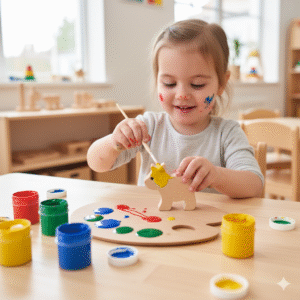 "Kindergarten students engaged in hands-on STEM activities")
Here are the key design considerations for different educational levels:
Preschool (Ages 3-5)
- Focus on sensory exploration and basic building skills
- Furniture should be child-sized with rounded edges
- Include water tables and sensory bins at accessible heights
- Create cozy reading areas with soft seating
- Ensure all materials are non-toxic and safe for young children
Elementary (Ages 6-11)
- Balance collaborative and individual work spaces
- Include simple technology tools like tablets and basic robots
- Design robust building areas with various materials
- Create clear zones for different types of activities
- Implement interactive wall displays for science concepts
Middle School (Ages 12-14)
- Introduce more complex technology and tools
- Design spaces for both collaborative projects and individual work
- Include areas for digital fabrication basics
- Create presentation spaces for sharing projects
- Ensure furniture can be easily reconfigured
High School (Ages 15-18)
- Design spaces that simulate professional environments
- Include advanced technology and specialized equipment
- Create areas for both collaborative projects and focused individual work
- Implement robust systems for project documentation
- Design flexible spaces that can accommodate various learning approaches
Classroom design directly impacts learning outcomes. A well-planned STEM space supports engagement, collaboration, and hands-on discovery.