

Struggling to find meaningful ways to support a child's development? You might overlook simple stories. But this is a powerful tool for shaping their future, starting from day one.
Storytelling is essential in early childhood because it builds the fundamental architecture for language[^1], cognition, and emotional intelligence. It provides children with a blueprint for understanding the world, sequencing events, and developing empathy, setting the stage for all future learning and social interaction.

In my years building a business in the mold industry, I learned one thing above all else: the foundation is everything. A tiny flaw in the initial design can ruin the final product. I see the same principle at work in early childhood. The experiences a child has between ages 0 و 3 are like the master mold for their developing mind. They shape how a child thinks, communicates, and understands the world around them.
That's why I'm so fascinated by the power of storytelling. It’s not just about entertainment. It’s a precision tool for development. It builds the neural pathways[^2] for language and teaches complex ideas like cause and effect. Let's break down how this process works and how you can use it effectively.
The human brain is hardwired for stories, which is why they are a more effective teaching tool than lists of facts.True
Neuroscience shows that stories activate multiple parts of the brain, including sensory, emotional, and motor areas, making information more memorable and impactful.
Children only begin to understand stories after the age of five.False
Even infants respond to the rhythm and tone of storytelling. By age two, toddlers can often follow simple plots and identify characters, showing early comprehension.
Why is Storytelling So Important in Early Childhood Education?
Do you ever feel like reading a story is just a way to pass the time? This simple act is actually one of the most critical learning opportunities for a young child.
Storytelling is vital because it directly wires a child's brain for language, empathy[^3], and complex thought. It provides a structured way to understand cause and effect, character motivations, and social norms, laying the groundwork for all future learning and interaction.
( Brain Activity During Storytelling")
When I design a mold, every single part has a purpose. The cooling channels, the ejector pins, the gates—they all work together to create the final product. Storytelling does the same thing for a child's brain. It’s not one skill; it’s a whole system of development working at once. It builds vocabulary[^4], but it also teaches children how to place words in the right order. It introduces characters, but it also helps a child understand why those characters feel happy or sad. This process is about building a complete framework for thinking and communicating.
The 'Mold' for Language
A story provides a rich context for words. A child doesn't just learn the word "brave." They hear a story about a brave knight, which connects the word to an action and an emotion. This is far more effective than a flashcard.
The 'Blueprint' for Cognitive Growth
Stories have a beginning, a middle, and an end. This simple structure teaches sequencing[^5] and logic. When a child asks "what happens next?", they are practicing predictive thinking.
| Skill Developed | Through Storytelling | Through Other Activities (e.g., Blocks) |
|---|---|---|
| Sequencing | Following a plot from start to finish. | Stacking blocks in a specific order. |
| Empathy | Understanding a character's feelings. | Learning to share a toy. |
| Vocabulary | Hearing new words in a meaningful context. | Naming the color of a block. |
| problem-solving[^6] | Thinking about how a character can solve a problem. | Figuring out how to build a stable tower. |
Reading stories to children can triple their vocabulary by the time they start school compared to children who are not read to.True
A study from Ohio State University found that young children whose parents read them five books a day enter kindergarten having heard about 1.4 million more words than kids who were never read to.
Picture books are less effective than books without pictures for language development.False
Pictures provide crucial context clues for young children, helping them comprehend the story and learn new words. They support, rather than hinder, language acquisition.
What are Some Effective Storytelling Techniques for All Ages?
Are you struggling to hold a child's attention during story time? Just reading words from a page can feel flat. I learned in my business that how you present an idea is as important as the idea itself.
Use varied voice tones for different characters, incorporate simple props like a scarf or a puppet, and ask interactive questions. For older kids, try collaborative storytelling where they add to the plot. The goal is to make it an active, shared experience.
When I explain a complex mold design to a client, I don't just show them the CAD file. I walk them through it. I point out the key features. I explain why a certain part is designed the way it is. It’s an interactive process. Storytelling with children should be the same. You are not just transmitting information; you are inviting them into a world. Your energy and methods are the tools that open the door for them. A simple change in your voice or a prop can turn a passive listener into an active participant.
Techniques for Infants (0-1 Year)
في هذا العمر, it's all about sensory input. The plot doesn't matter as much as the experience.
- Rhythm and Tone: Use a sing-song, rhythmic voice.
- Repetition: Read simple, repetitive books. The predictability is comforting and helps with memory.
- Touch: Use board books or cloth books they can touch and hold.
Techniques for Toddlers (1-3 Years)
Toddlers are starting to understand simple plots and want to participate.
- Interaction: Ask them to point to pictures. "Where is the dog?"
- Sound Effects: Make animal sounds or vehicle noises. Encourage them to join in.
- Props: Use a puppet or a teddy bear to help tell the story.
| Age Group | Technique | Primary Goal |
|---|---|---|
| 0-1 Year | Rhythmic reading, cloth books | Sensory stimulation, emotional bonding |
| 1-2 Years | Pointing at pictures, making sounds | Interactive engagement, vocabulary building |
| 2-3 Years | Asking "what happens next?", using props | Fostering imagination, simple plot comprehension |
Using different voices for characters confuses young children.False
Varying your voice helps children differentiate between characters, holds their attention, and models expressive communication, which aids in their social and emotional development.
Children should not be allowed to interrupt a story.True
While it can be disruptive, interruptions are often a sign of engagement. A child's questions or comments show they are thinking about the story and trying to connect it to their own world.
What are Common Challenges in Guiding Children’s Storytelling and How to Overcome Them?
Does your child get distracted, lose interest, or refuse to participate in storytelling? It's a common problem. But the solution is often simpler than you think, much like troubleshooting a flaw in a manufacturing process.
Common challenges include short attention spans, a limited vocabulary, and shyness. Overcome these by keeping stories short, using lots of visual aids, and creating a non-judgmental space where any contribution is celebrated. Focus on participation over perfection.
In my factory, when a part comes out of the mold with a defect, we don't blame the machine. We run a diagnosis. Is the temperature wrong? Is the pressure off? We identify the root cause and adjust the process. It's the same with a child who struggles with storytelling. The issue isn't the child; it's the process. Maybe the story is too long (wrong temperature) or too complex (wrong pressure). By diagnosing the real issue, we can make small adjustments that lead to a successful outcome.
Diagnosing the 'Defect': Why Kids Struggle
A child's "resistance" is usually a symptom of something else. A short attention span is normal for a toddler. Shyness can come from a fear of getting it "wrong." A limited vocabulary makes it hard to express ideas. It's our job to adjust the conditions to fit their developmental stage.
'Recalibrating' the Approach: Solutions
Don't force it. Make it fun. If a child is distracted, switch to a shorter, more interactive book. If they are shy, use a puppet to speak for them. If they don't know the words, give them picture cards to arrange into a story.
| Challenge | Potential Root Cause | Simple Solution |
|---|---|---|
| Short Attention Span | Story is too long or not engaging. | Choose shorter books; use an energetic voice; allow movement. |
| Shyness/Reluctance | Fear of being wrong or judged. | Use puppets; tell stories collaboratively; praise all effort. |
| Limited Vocabulary | Not enough words to express ideas. | Provide picture prompts; model storytelling; read more often. |
If a child can't sit still for a story, they are not ready for it.False
Many children, especially toddlers, are kinesthetic learners. They can listen and absorb a story while moving, fidgeting, or playing quietly with a toy.
Every story needs to have a clear moral or lesson.True
While many stories do have morals, the primary goal of storytelling in early childhood is language and cognitive development. A story can be successful just by being fun, imaginative, and engaging.
How Can You Guide Children to Create Their Own Stories in Class?
Is your classroom story time a one-way street? You talk, and they listen. Let's change that and turn them into active creators, not just passive consumers of stories.
Guide children by providing structured prompts like story starters ("Once upon a time, there was a dragon who was afraid of...") or picture cards. Use group activities where each child adds one sentence. Most importantly, model the process by creating your own simple stories out loud.
When I train a new designer, I don't just give them a textbook. I give them a small, manageable project. I provide the tools and a clear goal. Then, I work alongside them, showing them my process. Guiding a child to create a story works the same way. You can't just say, "Tell me a story." That's too big. You have to provide the tools—the prompts, the pictures, the structure—and then model how to use them. You're not the lecturer; you're the workshop foreman, guiding them as they build.
The 'Toolbox': Prompts and Starters
Give them a starting point. A box of random objects can be a great source of inspiration. Pull one out and ask, "What story can we tell about this old key?" Picture cards with characters, settings, and problems are another fantastic tool.
The 'Assembly Line': Collaborative Story Building
This takes the pressure off any single child.
- Sit in a circle.
- You start the story with one sentence: "A little fox was lost in the city."
- The next child adds the next sentence.
This group effort makes everyone feel successful.
| Activity | Description | Learning Outcome |
|---|---|---|
| Story Stones | Children pick painted stones and use the images to build a plot. | Creativity, sequencing, object association. |
| "What If" Game | Pose a silly "what if" question (e.g., "What if our cat could talk?"). | Imaginative thinking, cause-and-effect reasoning. |
| Puppet Theater | Children use puppets to act out a story they create. | Character development, dialogue practice, confidence. |
Children need to be able to write before they can create their own stories.False
Oral storytelling is the foundation of literacy. Children can create complex and imaginative stories verbally long before they have the fine motor skills and spelling knowledge to write them down.
Using story prompts limits a child's creativity.True
For young children, a blank slate can be intimidating. Prompts provide a scaffold, a starting point that reduces anxiety and actually unlocks creativity by giving them something to build upon.
How Do You Design Storytelling Environments for Children?
Is your reading corner just a bookshelf and a rug? An uninspired space can kill creativity before it even starts. Let's design an environment that invites imagination, just like a well-designed workshop invites innovation.
Design an effective storytelling environment[^7] by making it comfortable, quiet, and visually rich. Include a cozy seating area, a variety of accessible books, and materials like puppets, felt boards, and drawing supplies that empower children to tell their own stories.
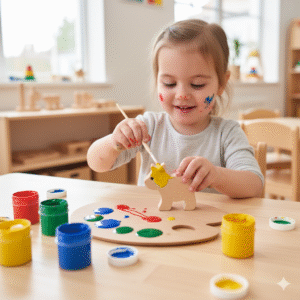 "Cozy Classroom Reading Corner")
The layout of my factory floor is designed for efficiency and safety. Everything has its place. The raw materials are here, the machines are there, and the finishing station is over there. A storytelling environment needs that same level of intentional design, but for creativity. It should be a special place that feels different from the rest of the room. It should signal to a child, "This is a place where magic happens. This is where stories live." A well-designed space doesn't just hold books; it invites children into the world of imagination.
The 'Zoning' of a Creative Space
Define the area clearly. Use a special rug, a small tent, or a canopy to create a sense of enclosure and focus. It should be in a quieter part of the room, away from loud, active play. Make it comfortable with soft pillows, cushions, or beanbag chairs.
'Materials and Equipment' for Imagination
The tools should be within reach. Use forward-facing bookshelves so children can see the covers, which are the real invitation. Have a basket with puppets, a felt board with characters, or a simple "stage" for acting out tales. These aren't just toys; they are storytelling equipment.
| Environmental Element | Purpose | مثال |
|---|---|---|
| Comfortable Seating | Encourages children to stay and relax. | Beanbags, large pillows, a soft rug. |
| Defined Boundary | Signals a special, focused area. | A small play tent, a canopy, or a distinct carpet. |
| Accessible Materials | Empowers children to lead their own storytelling. | Low, forward-facing bookshelves; baskets of puppets. |
| Good Lighting | Makes reading easy and the space feel welcoming. | A soft lamp or a spot near a window. |
The more books you have in a reading corner, the better.False
Quality is more important than quantity. A cluttered, overwhelming shelf is less effective than a curated, rotating selection of 10-15 age-appropriate and engaging books.
Digital storybooks on tablets are just as good as physical books.True
While digital books can be engaging, studies show they often lead to less parent-child conversation. The interactive elements can distract from the narrative, whereas physical books tend to foster more dialogue and bonding.
Conclusion
Storytelling is the master mold for a child's mind. It shapes language, sparks imagination, and builds the emotional and cognitive foundation for a lifetime of learning and success.
References
[^1]: Understanding language development is crucial for fostering effective communication skills in children.
[^2]: Learn about the neuroscience behind storytelling and its impact on brain development.
[^3]: Explore the ways storytelling can help children relate to others and develop empathy.
[^4]: Investigating vocabulary growth through storytelling can enhance language learning strategies.
[^5]: Understanding sequencing can help educators design better learning experiences for children.
[^6]: Understanding the connection between storytelling and problem-solving can inform educational practices.
[^7]: Learn how to design spaces that inspire creativity and enhance storytelling experiences.