
Children need time to explore independently. Solitary play builds essential skills for future success.
Solitary play is when children play alone, focusing on activities that interest them. This independent play helps develop concentration, problem-solving abilities, and self-confidence without adult intervention or peer interaction.
![Child engaged in focused solitary play with building blocks]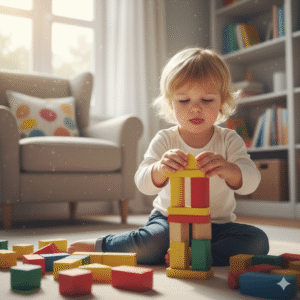 "Child focused on building blocks during solitary play")
Looking to understand why your child plays alone? Solitary play is a natural developmental stage that fosters independence and crucial cognitive skills in young learners.
What is Solitary Play?
Solitary play represents one of the earliest forms of children's independent activity. It looks different from other play types but serves vital developmental functions.
Solitary play involves a child engaging in activities independently without seeking participation from others. The child focuses completely on their chosen activity, demonstrating self-direction and sustained attention to their own interests and discoveries.
![Toddler exploring shapes during independent play] Toddler exploring shapes during independent play")
Solitary play differs from other play types in several key ways:
| Play Type | Description | Key Characteristics |
|---|---|---|
| Solitary Play | Child plays alone | Independent focus, self-directed, no interaction with others |
| Parallel Play | Children play alongside each other | Similar activities, minimal interaction, side-by-side engagement |
| Associative Play | Children play together with similar goals | Shared materials, communication about activities, no organized structure |
| Cooperative Play | Children work together toward common goals | Assigned roles, organized rules, shared objectives |
Understanding solitary play helps parents recognize its value in child development. This independent form of play isn't isolation - it's a crucial step in building self-sufficient, confident learners.
When Does Solitary Play Begin?
Children naturally progress through different play stages as they develop. Solitary play emerges early and evolves alongside growing social skills.
Solitary play typically begins around 12-18 months of age, although some children may engage in independent play slightly earlier. This play style peaks between 2-3 years old as toddlers develop autonomy and focused interests.
![Infant exploring independently with sensory toys]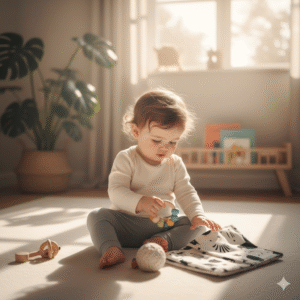 "Infant exploring independently with sensory toys")
As children grow, their play patterns develop in predictable ways:
-
Birth-6 months: Children primarily engage in exploratory play, observing their environment and moving limbs without clear purpose.
-
6-12 months: Object exploration emerges, with children examining items through banging, mouthing, and dropping. Play remains largely independent.
-
12-24 months: Solitary play becomes more purposeful, with children showing preferences for specific activities and demonstrating longer attention spans.
-
2-3 years: Children engage in more complex solitary play, often imitating adult behaviors and creating simple scenarios with toys.
-
3+ years: While parallel and cooperative play increase, children still benefit from regular opportunities for independent play, which helps develop focus and problem-solving skills.
Benefits of Solitary Play for Children
Solitary play offers numerous advantages that extend beyond simple entertainment. These benefits contribute to well-rounded childhood development.
The advantages of solitary play include enhanced concentration skills, improved problem-solving abilities, strengthened independence, boosted creativity, better emotional regulation, and increased self-confidence as children master challenges on their own.
![Child proudly showing completed solitary project] "Child proudly showing completed puzzle project")
Key benefits of solitary play include:
-
Develops Concentration: Independent play helps children practice focusing on tasks without distractions, building attention spans that support future learning.
-
Enhances Problem-Solving: When playing alone, children must figure things out independently, developing critical thinking and persistence when facing challenges.
-
Builds Independence: Solitary play helps children learn to entertain themselves, reducing dependence on constant adult interaction or peer validation.
-
Fosters Creativity: Without the influence of others' ideas, children's imaginations can run freely, leading to innovative play scenarios and solutions.
-
Improves Emotional Regulation: Playing alone provides practice in managing emotions, handling frustration, and experiencing the satisfaction of completing self-selected tasks.
-
Boosts Self-Confidence: Mastering challenges during solitary play builds a sense of competence and self-efficacy that carries over to other areas of life.
-
Supports Self-Discovery: Independent play allows children to explore their authentic interests and preferences, helping them understand their own personalities.
Examples of Solitary Play
Solitary play takes many forms across different ages and interests. Real-world examples help parents recognize and support this valuable play style.
Common examples of solitary play include building with blocks, drawing or coloring, reading books, playing with dolls or action figures, solving puzzles, creating with clay or playdough, and exploring nature items independently.
![Child drawing independently at a small table]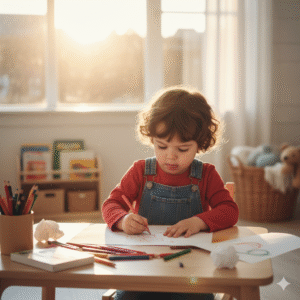 "Child drawing independently at child-sized table")
Age-appropriate solitary play examples include:
Toddlers (12-24 months):
- Stacking rings on a peg
- Filling and dumping containers
- Looking at picture books independently
- Playing with shape sorters
- Exploring musical instruments alone
Preschoolers (2-4 years):
- Building simple structures with blocks
- Drawing or coloring pictures
- Playing with dolls or action figures in imagined scenarios
- Solving simple puzzles
- Creating art with clay or playdough
Early School Age (5-7 years):
- Reading chapter books independently
- Building complex Lego creations
- Playing educational games on tablets or computers
- Conducting simple science experiments
- Writing or illustrating stories
These examples demonstrate how solitary play evolves with children's developing abilities and interests while maintaining its core value as independent, focused activity.
How to Support Children in the Solitary Play Stage
Parents can create environments that nurture healthy solitary play. Support strategies respect children's need for independence while providing appropriate resources.
Supporting solitary play involves creating a safe, stimulating environment with accessible materials, allowing uninterrupted playtime, balancing independence with social interaction, and observing to understand children's emerging interests and skills.
![Child's play area with organized materials for independent play] "Organized play area with materials accessible for independent use")
Practical strategies for supporting solitary play:
-
Create a Play-Rich Environment: Stock a play area with diverse, age-appropriate materials that invite exploration and independent creativity.
-
Ensure Easy Access: Store toys and materials at child-friendly heights so children can select and put away items independently.
-
Allow Uninterrupted Time: Schedule sufficient blocks of time (20-45 minutes for preschoolers) for children to become fully engaged in their chosen activities.
-
Balance Social and Independent Time: While supporting solitary play, maintain opportunities for social interaction as children develop.
-
Observe Without Directing: Watch children play occasionally to understand their interests and abilities, but avoid directing their play or intervening constantly.
-
Rotate Toys: Regularly introduce new materials and rotate existing toys to maintain engagement and challenge developing skills.
-
Model Independent Activities: Children learn by watching adults engage in focused activities like reading, cooking, or crafting.
By supporting solitary play, parents help children develop crucial skills while fostering the confidence and independence needed for future success.